
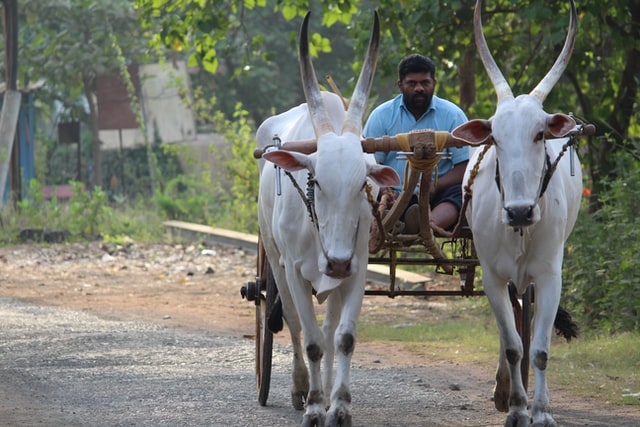
He looked into my tender eyes
Just before he raised the machete
To take me down from my throat
And let me bleed to death in pain
That’s one thing we don’t have, a language with words. Irrespective of our beauty and benefits, our absence of words is taken as a nod for violence and cruelty on us. I have seen my family get slaughtered right in front of my eyes and I felt an invisible pain; as though a part of me was being taken away. That’s a true feeling after all, as the entire ecosystem is my family and we exist as one.
I am just a cow in this whole wide world but I have lived through decades only to see the pain of my kind, around me. For milk or meat, my dear ones are taken away and brutally killed. My only dose of happiness comes from a kind human who feeds me with love or a kid jumping around and patting me. For once, the touch of a human feels calm, when it means no harm…
— The voice of the slaughtered and the few who survived
As we speak of these tender eyes, humankind is blessed to have an entire ecosystem of wonderful animals and birds, the gentle planet mates, that keep everything in balance. As humans, a few of us have gone to the inhuman extent of harming and hurting them but all hope is not lost as we still have a few people and organizations that stand for this cause with compassion.
Akhila Karnataka PraniDaya Sangh or AKPDS, as it is popularly called, is one such organization with a mission to spread awareness about animal cruelty and protect cattle and cows, recognised by the Animal Welfare Board of India. AKPDS provides food, shelter, water and medical treatment to more than 1000 animals such as cows, cattle, buffalos, camels, horses and others & feeds thousands of pigeons and birds each day.
While in conversation with Mr Sunil Dugar, the Secretary of AKPDS, we uncovered the less spoken stories of the voiceless. His narration felt like we were taking a walk in the gaushala walking along with the cows when we heard their mesmerizing stories.
Here is the eye-opening interview we had with Mr Sunil…
Q1. What is the purpose of AKPDS and how do people relate to it?
It is a very story as to how we got started in 1981. After we rescued several cows from slaughter, we had to create an infrastructure to enable a good life for them and that’s how the Goshala started. During this phase, we went on to create awareness about the laws pertaining to animal cruelty, animal welfare and give people a sense of how unfairly animals are being treated everywhere.
With time, we have gathered momentum and support from a huge community of people who relate with the cause and are ready to make our planet more inclusive. We drive awareness campaigns, rescue animals from slaughters and sacrifices, feed and take care of several thousands of animals every day and host children at our Goshala so that they can embrace our ideology from a tender age.
Q2. Could you share some stories of the animals here?
We have a rescue cow named Gowri, who is of the native Halikar breed, who entered our lives when she was pregnant. We were happy to be able to rescue a pregnant mother and we had the privilege to see her give birth here at our Goshala, shortly after the rescue.
To date, she has given birth to around 11 calves and we have seen them grow up around here. The possibility of this would have ended if she was slaughtered that day and like her, our hearts are with the lakhs of cows and animals that are brutally killed.
We feed around 20,000 pigeons every day and we have a lot of monkeys that we have rescued when people have tried to poison them and get rid of them in gunny bags. Today, the happiness and joy they bring us are immeasurable.
We have a bullock that we call Shiva with love and he is aged 23 years. There are a lot of cows that are aged 25+ years, which today is a rarity as cows are slaughtered the day they stop being of use to people.
The beauty of this place is when people visit us, they take back a sense of contentment and visit us periodically as they feel rejuvenated with us.
Q3. What are the breeds you have here and what is the significance of it?
At present Gaushala is protecting the breeds such as Halikar, Amrutmahal, Malad- Gida,Gir, Devini, Angola, Bergur and other breeds. We are protecting, maintaining and developing these native breeds so that we do not lose our indigenous breeds
Due to drought and severe shortfall of rain during 2016 getting fodder was a very difficult task in 2017, Hundreds of cows/cattle died and thousands were sold to butchers. This is when Akhila Karnataka PraniDaya Sangha in March 2017 started two temporary Gaushala at Mahadeswara Betta HaleHuru & Vadahalli in Chamrajanager district, feeding 3000 cows cattle daily.
AKPDS provides food, shelter, water and medical treatment to more than a thousand animals such as Cows, Cattle, Buffalos, Camels, Horses and others & feeds thousands of pigeons and birds each day. Milk yield per day is around 100 litres and the same is given to newborn calves and only the excess is sold to the residents of surrounding areas.
We have employed 23 families to take care of animals and have provided homes for them at the premises; we are also providing education to their children.
Q4. What is your message from the AKPDS, for the children of today?
While we were rescuing animals from the age-old rituals of animal sacrifices in various parts of the state, we noticed that it is usually preceded and followed by people drinking around day and night around children and sacrificing animals letting the blood flow through everywhere. This imagery for a growing tender mind sets the wrong notion on the kind of life we should live and the world we need to create around us.
The ideas and perspectives that we give children at a young age, stay with them as adults and determine their behaviour, choices and actions. By spending more time with animals, kids tend to develop compassion and empathy. They also feel very energised and positive after a visit to the Sangh and feel connected to mother earth, as one and whole.
They start to feel empathetic towards all creatures and develop little acts of kindness like keeping a water pot outside the house for dogs and birds and adopting strays to give them a better life.
In the long run, as a result, they become people who make the right choices not just for themselves but more importantly for the environment, and mother earth.
 The Compassion Express